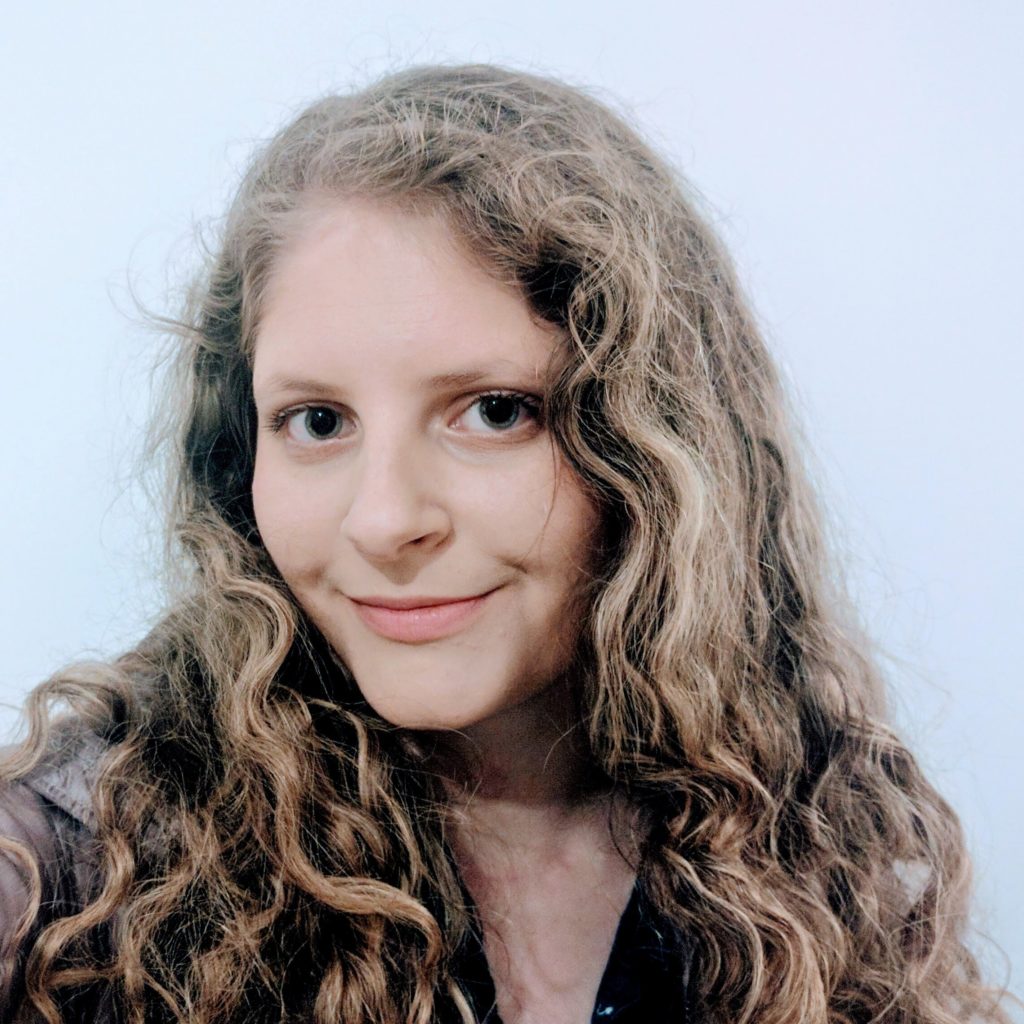
Veronica leads the research at Loora, developing a virtual teacher that helps users improve their English through conversation. Before that, she was a senior NLP researcher at Citi, founded her venture in virtual medical assistants, and worked as a software engineer at Google Research. Before that, she worked in the cyber-security industry, first as a team leader in 8200 and then at Team8. Veronica holds a BSc in Computer Science and Neuroscience and an MSc in Computer Science from Tel-Aviv University.
Bio
Veronica leads the research at Loora, developing a virtual teacher that helps users improve their English through conversation. Before that, she was a senior NLP researcher at Citi, founded her venture in virtual medical assistants, and worked as a software engineer at Google Research. Before that, she worked in the cyber-security industry, first as a team leader in 8200 and then at Team8. Veronica holds a BSc in Computer Science and Neuroscience and an MSc in Computer Science from Tel-Aviv University.
Abstract
Text generation models are usually trained using the standard maximum likelihood objective. While it generally works well, these models were also shown to suffer from problems such as copying and repetitions, and in open-ended tasks, they sometimes produce boring, flat outputs and even logical flaws. In this talk, I will introduce the Unlikelihood loss and help control text generation. We will present its application to a wide range of problems, from repetitions and frequent word over usage to contradictions and gender bias. Finally, I will present our use case of applying it to train an English-teaching dialog agent.
Discussion Points
First, how to decide whether a labeled data is a must?
Different types of labeling challenges we’ve dealt with as data scientists (partial labels, noisy labels, etc.)
Academic approaches that discuss possible solutions to these problems
Practical solutions we eventually implemented
Interesting case studies and results
Discussion Points
First, how to decide whether a labeled data is a must?
Different types of labeling challenges we’ve dealt with as data scientists (partial labels, noisy labels, etc.)
Academic approaches that discuss possible solutions to these problems